
Root Canal Treatment Summerfield
Quickly Ridding You of Tooth Infections
Among the many myths about root canals, one of the worst is the idea that they hurt. Modern technology and methods ensure these treatments don’t cause aches or pains. Instead, they just relieve the discomfort and distress of your infected teeth. That means you shouldn’t hesitate to contact us for root canal treatment here in Summerfield. Through this service, Dr. Parry and our team will help your aching tooth (or teeth) feel much better. Learn more by reading below or book a visit today!
Why Choose Magnolia Shores Dental for Root Canal Treatment?
- Advanced Dental Imaging for Accurate Treatment Planning
- Dentist Trained in Using Conscious Sedation
- Carefully Chosen, Passionate Dental Team Members
Do I Need Root Canal Treatment?

A root canal is a way to save an infected tooth, which is caused by harmful bacteria reaching the tooth’s pulp. So, patients usually need one when they show signs of infected teeth. The typical symptoms of a tooth infection are:
- Tooth Sensitivity – If your tooth hurts from hot or cold temperatures, it may be infected.
- Prolonged Tooth Pain – While occasional tooth pain is normal, a persistent ache can point to an infection.
- Discolored Tooth – After a tooth becomes infected, its surface can darken.
- Tooth Looseness – Pus from infected tooth pulp can soften the bone beneath a tooth over time. This effect can make the tooth feel loose.
- Swollen Gums – An infected tooth’s pulp gathers in the gums, making the tissues swollen and tender.
The Root Canal Process

Compared to other dental services, a root canal tends to be complex and invasive. Dr. Parry and our team follow a multi-step process when performing one.
For starters, Dr. Parry will numb your mouth with local anesthesia. Doing so will keep you from feeling pain during the subsequent work on your tooth. At most, you’ll only sense some mild pressure as our team treats your infection.
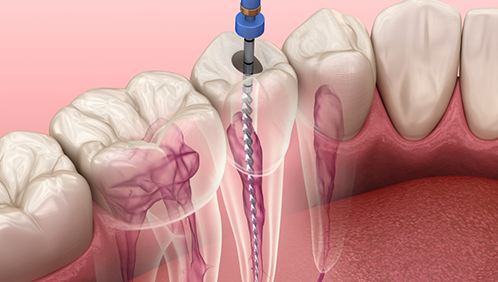
When the tooth is properly numbed, Dr. Parry will start the actual treatment. He’ll first use dental instruments to reach your tooth’s inner chamber and remove its pulp. Next, he’ll sanitize this interior and refill it with gutta-percha (i.e., a filling material). Dr. Parry will then wrap up care by sealing the tooth and protecting it with a temporary crown.
You'll return for a follow-up visit a few weeks after the initial treatment. At that time, you'll receive your final and permanent dental crown. This device will protect your treated tooth and keep it safe!
The Benefits of Getting a Root Canal
Once you’ve had a root canal, you’ll enjoy upsides like:
- Pain Relief – Since infected tooth pulp causes pain, a root canal will relieve your aches by removing this material.
- No Tooth Loss – A root canal saves your tooth by removing its infected pulp. In other words, it’ll help you avoid a future tooth extraction or replacement.
- Dental Protection – Once you receive your dental crown, your tooth will be protected from further harm. It’ll be much less likely to suffer further decay or re-infection.
- Lifelike Results – A root canal’s filling material and dental crown are both tooth-colored, so they’ll hide your previous tooth damage.
Advanced Reciprocating Technology for Root Canal Treatment
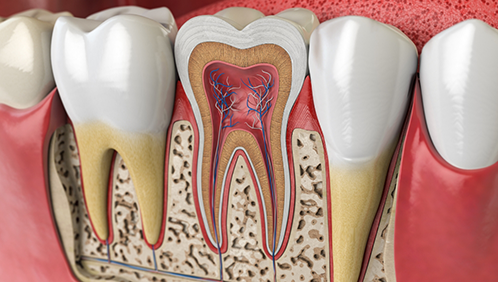
When performing root canal therapy, a small hole is created in a tooth so the dentist can access and remove any infected interior tissue. Most dentists use rotary files, or instruments that spin in one direction, to accomplish this. Dr. Parry, however, utilizes reciprocating files, which can spin both ways. This allows him to complete the treatment faster while also preserving more of a tooth’s structure, helping the tooth maintain its strength to drastically lower the risk of cracking or breaking in the future.
Ultrasonic Root Canal Therapy
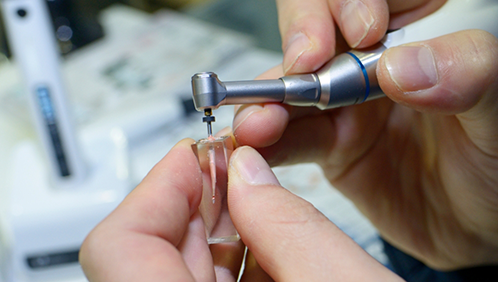
Ultrasonic root canal therapy involves cleansing the inside of an infected tooth using concentrated sound energy. This removes more debris compared to simply rinsing the tooth with a liquid solution, the method used by most other dentists. It does a better job of eliminating harmful bacteria and dead tissue so that the inside of the tooth is left cleaner and healthier. As a result, the chances of the infection coming back are reduced to practically zero.
