
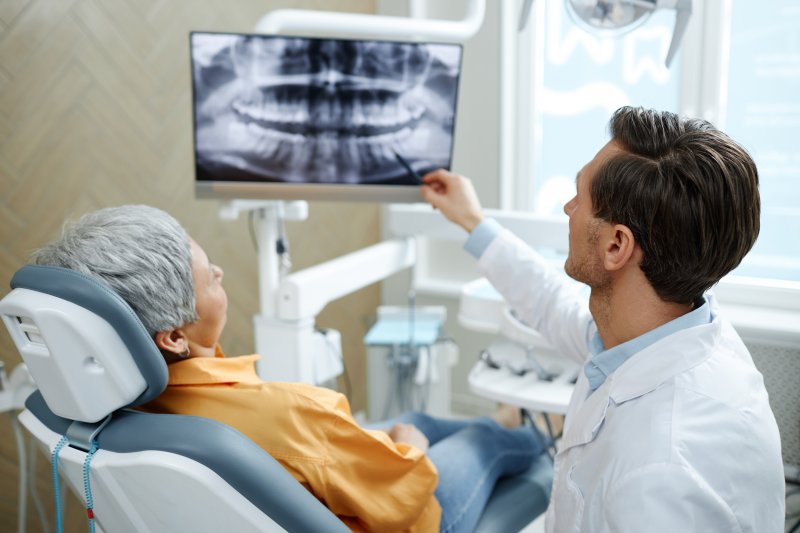
Whether you’re trying to choose a new practice or thinking about making a switch, finding a dentist near you who checks all your boxes can be difficult. To make matters worse, there’s really no way to define “best” for everyone. It’s a bit subjective, and what works for you may not work for your neighbor. I’ve been helping patients for years, and I consider myself an expert when it comes to patient care. So, if you need a good checklist to guide you towards “the one,” just keep reading!
#1. What Kind of Work Do You Need Done?
If you just need a checkup and cleaning, most dentists will be able to reliably do that for you. However, if you have missing teeth and need a more specialized treatment, like dental implants, your options narrow. In these cases, it’s important to make sure that the practice provides the service you need, and the dentist has the right kind of training! To find this information, check their website to see if they have a bio page—that’s usually where you’ll find it.
#2. What Do the Reviews Say?
While you’re checking a potential dentist’s website, look for reviews—either on their home page or on a third-party site like Google, Yelp, or Reddit. This can give you a “vibe check,” showing you what real patients think about the practice and their own results. If the practice has a lot of positive words being said about it in multiple places, it’s worth a visit!
#3. Do They Have New Technology?
Now, tech isn’t everything, but it can drastically improve your experience by making your care faster, more comfortable, and more convenient. For more complex treatments that require precise surgery, advanced technology is a must, as it affects the quality of care, and your results.
For example, CBCT scanners capture much more detailed images than regular X-rays and provide a 360-degree view of your mouth. They’re a necessity for any practice offering dental implants, TMJ treatment, or other surgical solutions.
#4. What Are the Dentist’s Credentials?
The qualifications you should look for will depend on your needs. There are so many different advanced training programs and certifications available in the dental field, that it’s difficult to keep track of them all. While I recommend doing some research yourself, here are some of the more common ones and what sort of treatments they’re well-suited for:
The American Dental Association (ADA)
The vast majority of dentists are affiliated with the ADA in some way. They set the standards for dentistry and provide evidence-based guidance on the best dental care products for your health (as well as which ones to avoid).
American Academy of Implant Dentistry
A dentist who’s a member of this organization has completed advanced training in dental implant treatments and is well-qualified to place and restore them—even if they’re not a prosthodontist.
American Academy of Cosmetic Dentistry
There’s not a specialty designation for cosmetic dentistry, so anyone can claim to be a “cosmetic dentist.” There are, however, several organizations like this one that speak to a dentist’s skills with veneers, teeth whitening, bonding, and other services.
Continuing Education Center Credentials
Institutions like the KOIS Center and SPEAR Education offer top-notch training courses for dental professionals. They offer a variety of programs, including ones dedicated to dental implants, TMJ therapy, and sleep dentistry.
Dental Specialty Designations
There are several dental specializations in the field, from prosthodontics and endodontics to orthodontics and oral pathology. A specialist has completed all the education necessary to be a qualified general dentist and then some. A periodontist, for example, specializes in gum health and gum-related treatments, and has completed an additional two to three years of schooling just for periodontics. Many even go through rigorous testing to become board-certified, which adds one more layer to their skills.
While it’s not always necessary to see a specialist, it’s definitely worth considering, especially if a general dentist doesn’t have advanced training in the treatment you need.
As you’re comparing different dentists, keep track of how each one measures up against these four questions. That way, you have a reference you can easily look back on when you’re ready to choose a practice and make your appointment. Everything you can do to help simplify your search will make the process much less intimidating! And, of course, if you need someone to talk to about any of this, I’m always available right here at Magnolia Shores Dental.
About The Author
Dr. Tristan J. Parry is the founder of Magnolia Shores Dental, where he provides comprehensive care for patients throughout the Triad area. A graduate of The Ohio State University and a Kois Center-trained dentist, Dr. Parry has top-of-class expertise in implants, cosmetic dentistry, and TMJ treatment. When you’re ready to find a dentist near you who truly caters to your needs, contact us. Our friendly team is ready to welcome you.